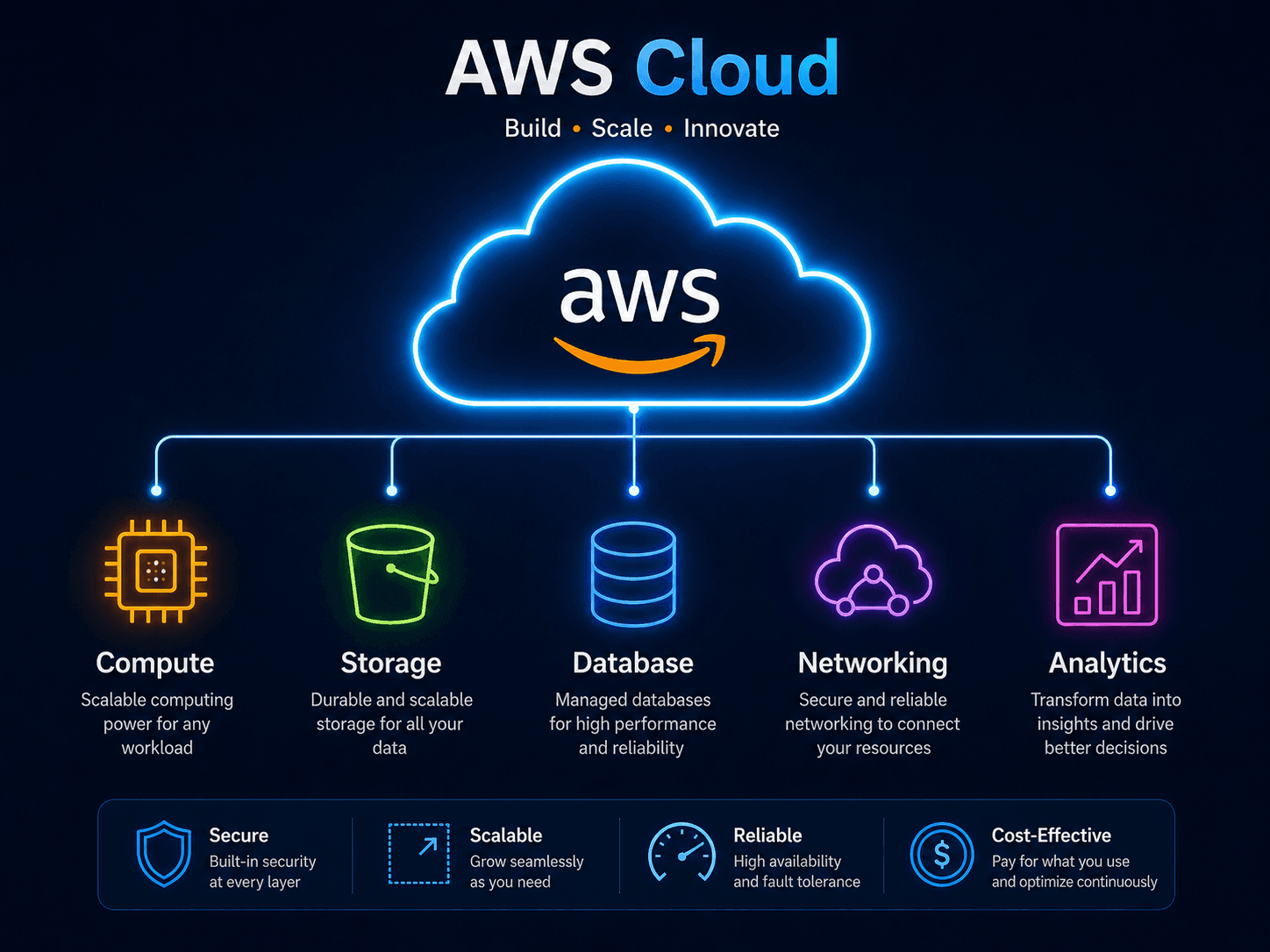
AWS Cloud Economics: Why the Money Works Differently
Fixed versus variable costs, the hidden expenses of owning servers, licensing choices, and right-sizing — the cost concepts the Cloud Practitioner exam actually tests.
Cloud concepts
Topic
16 posts on this topic.
Fixed versus variable costs, the hidden expenses of owning servers, licensing choices, and right-sizing — the cost concepts the Cloud Practitioner exam actually tests.
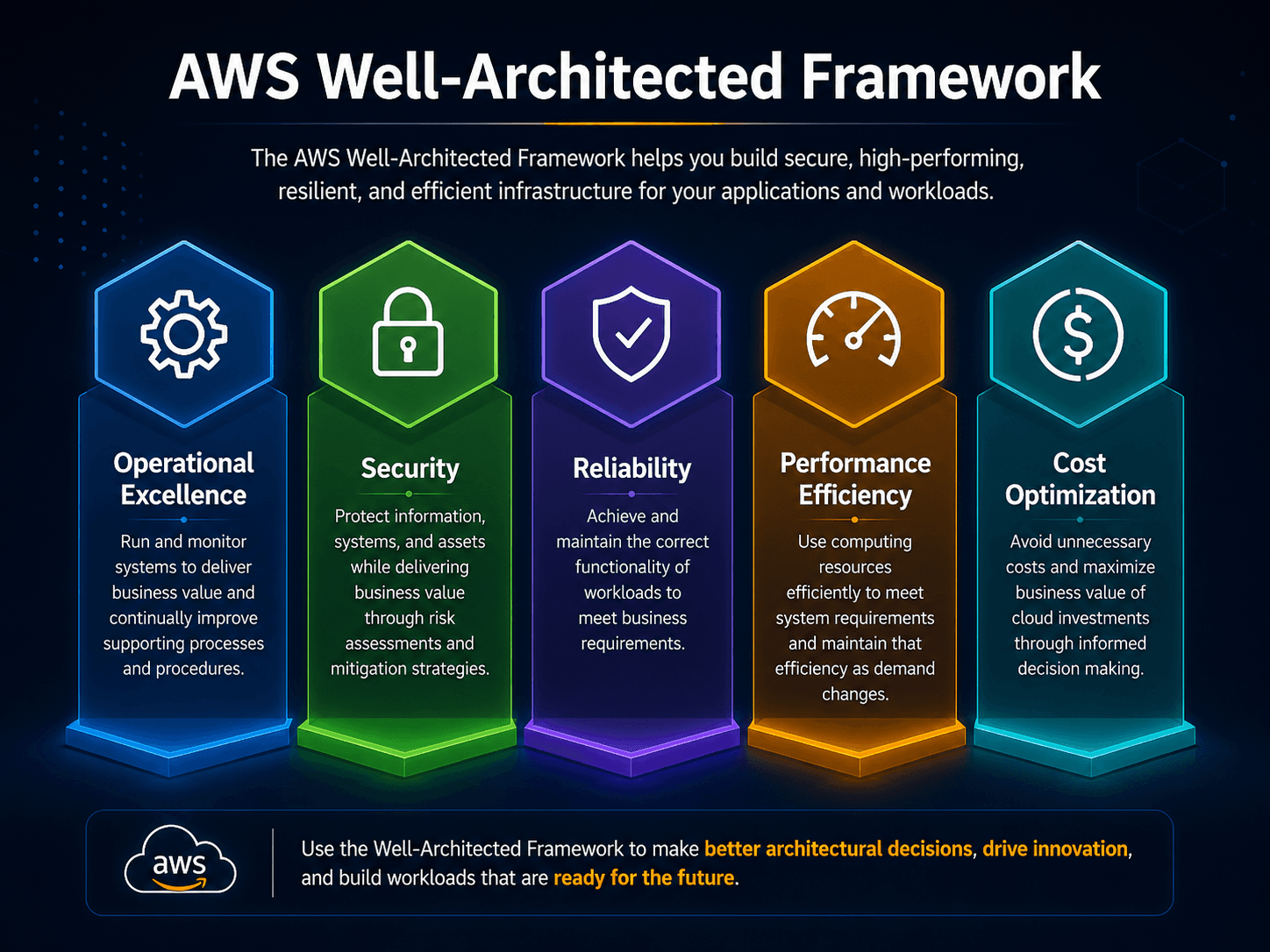
A plain-English walkthrough of the six Well-Architected pillars, the Well-Architected Tool, and how they connect to real design decisions.
The seven common strategies for moving an application to AWS, and the AWS services that support planning, moving, and validating a migration.
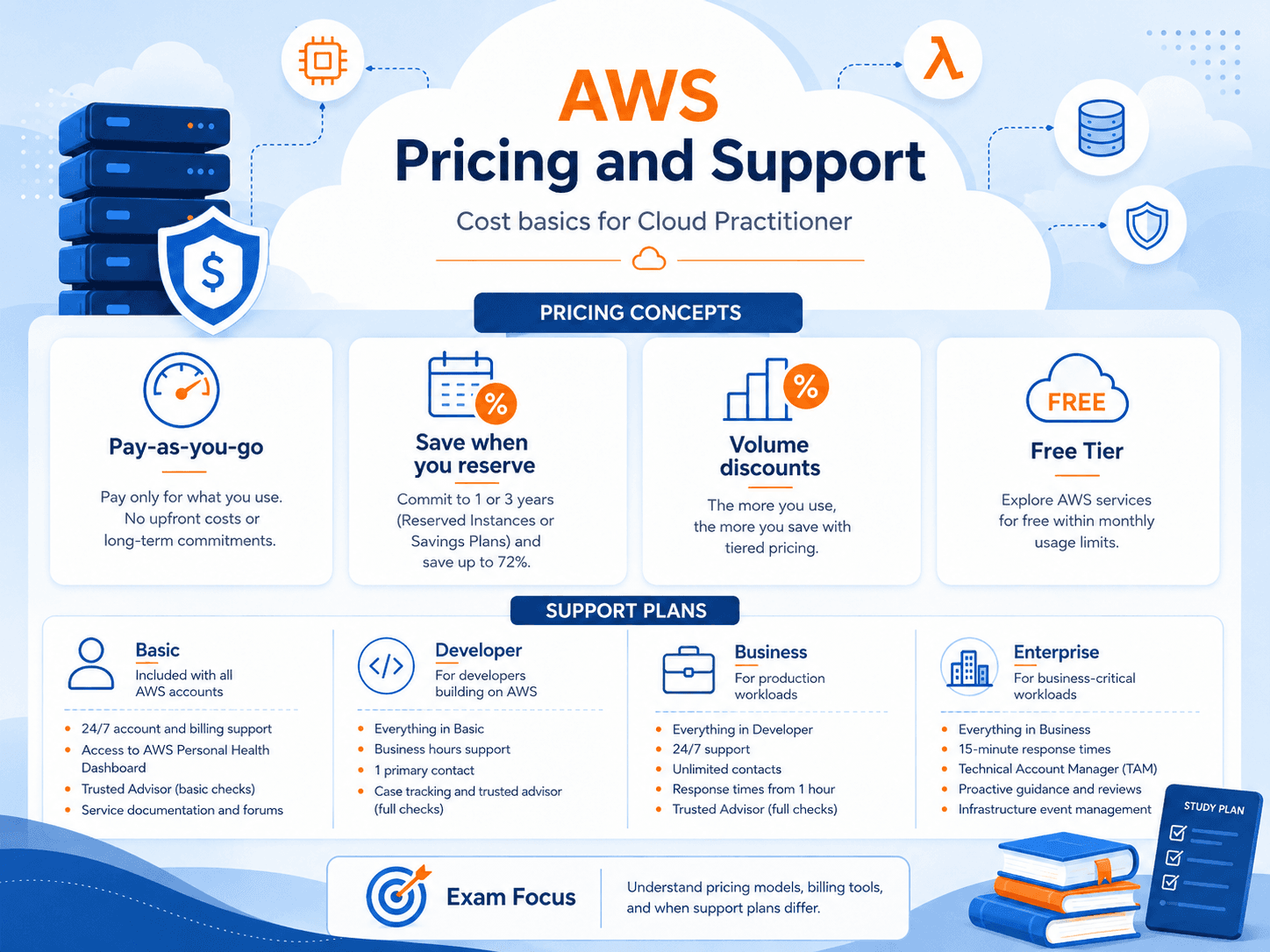
How AWS pay-as-you-go pricing works, the tools that help you estimate and track spending, and what each AWS Support plan actually offers.
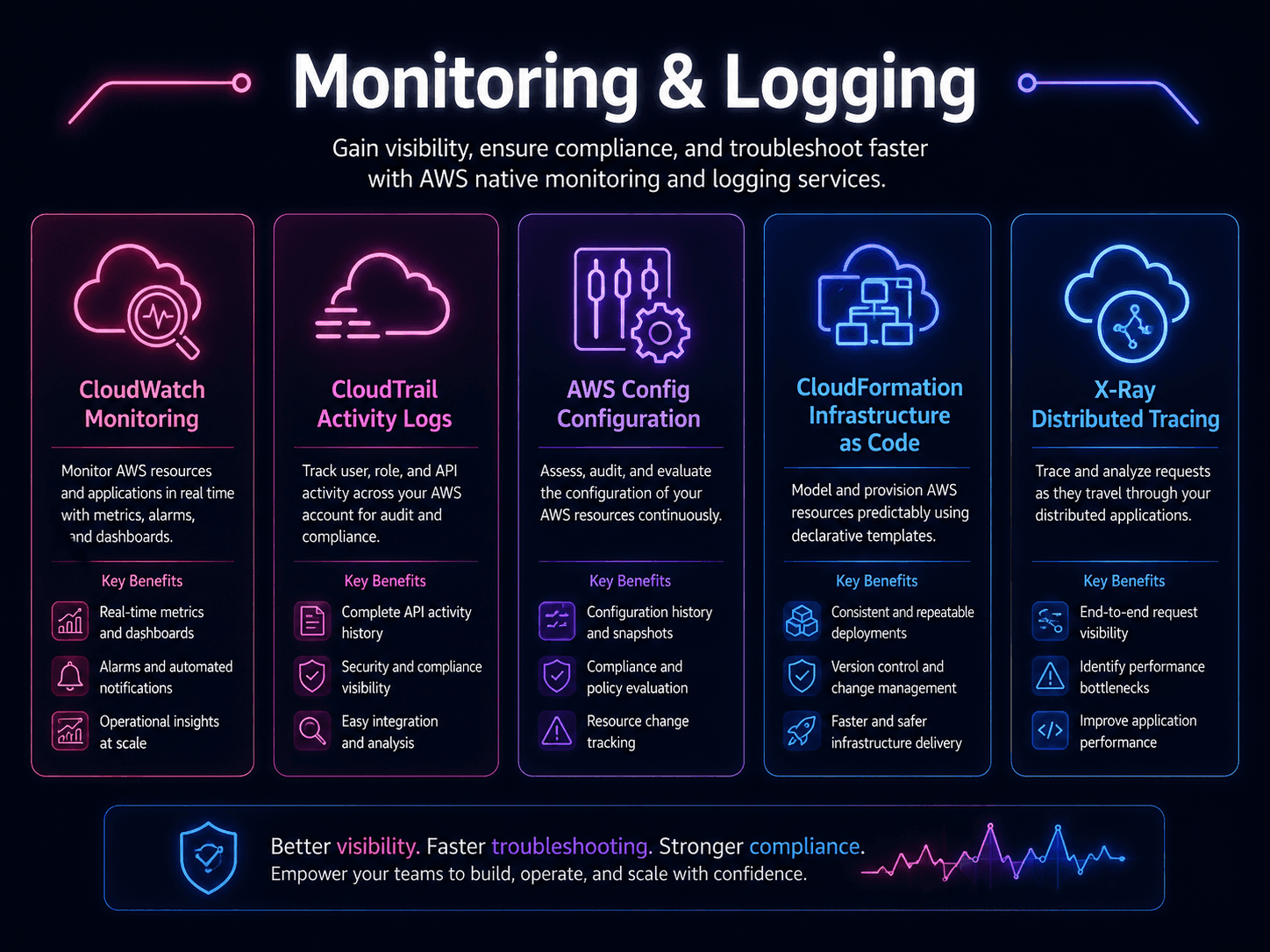
How CloudWatch, CloudTrail, AWS Config, and Organizations work together to keep AWS accounts visible, compliant, and under control.
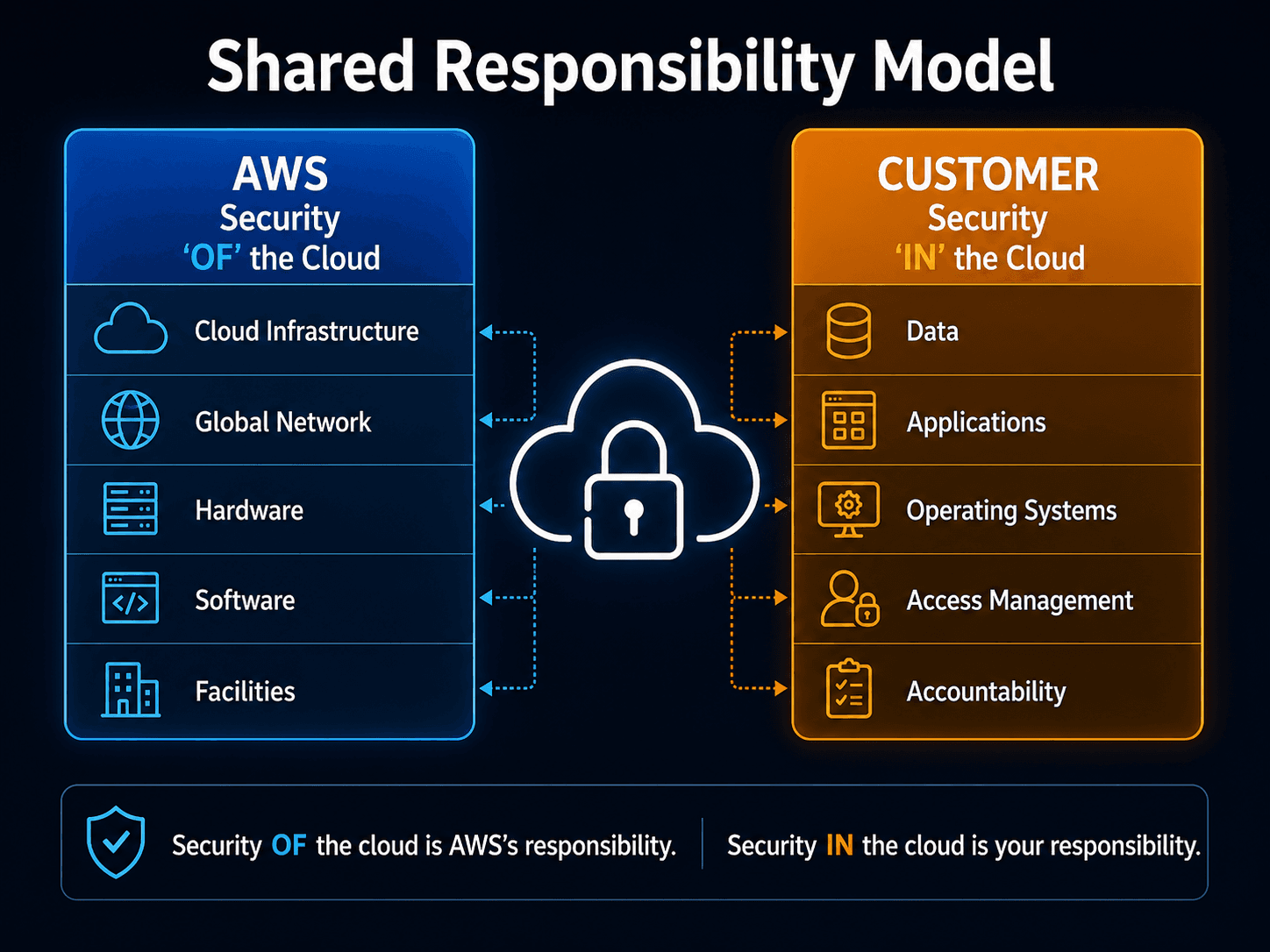
A plain-English guide to the Shared Responsibility Model, IAM, encryption, and threat-detection tools like GuardDuty, built around a neighborhood-watch analogy.
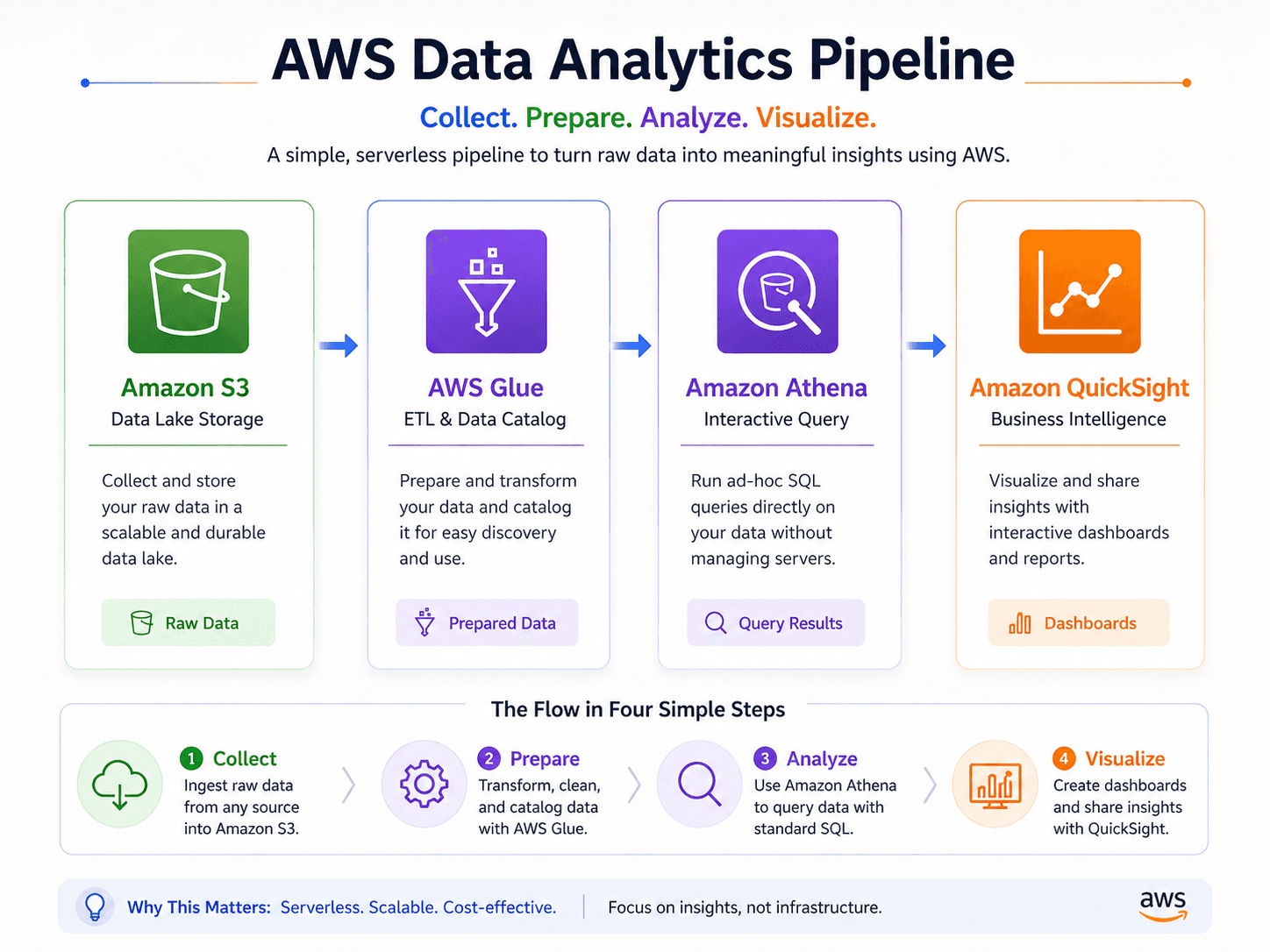
A plain-English introduction to SageMaker, Bedrock, ready-made AI services, and ETL tools like Glue and Athena, for readers new to AI and data pipelines.
A plain-English walkthrough of RDS, Aurora, DynamoDB, and database migration tools, using a filing-cabinet-versus-sticky-notes analogy to explain when each fits.
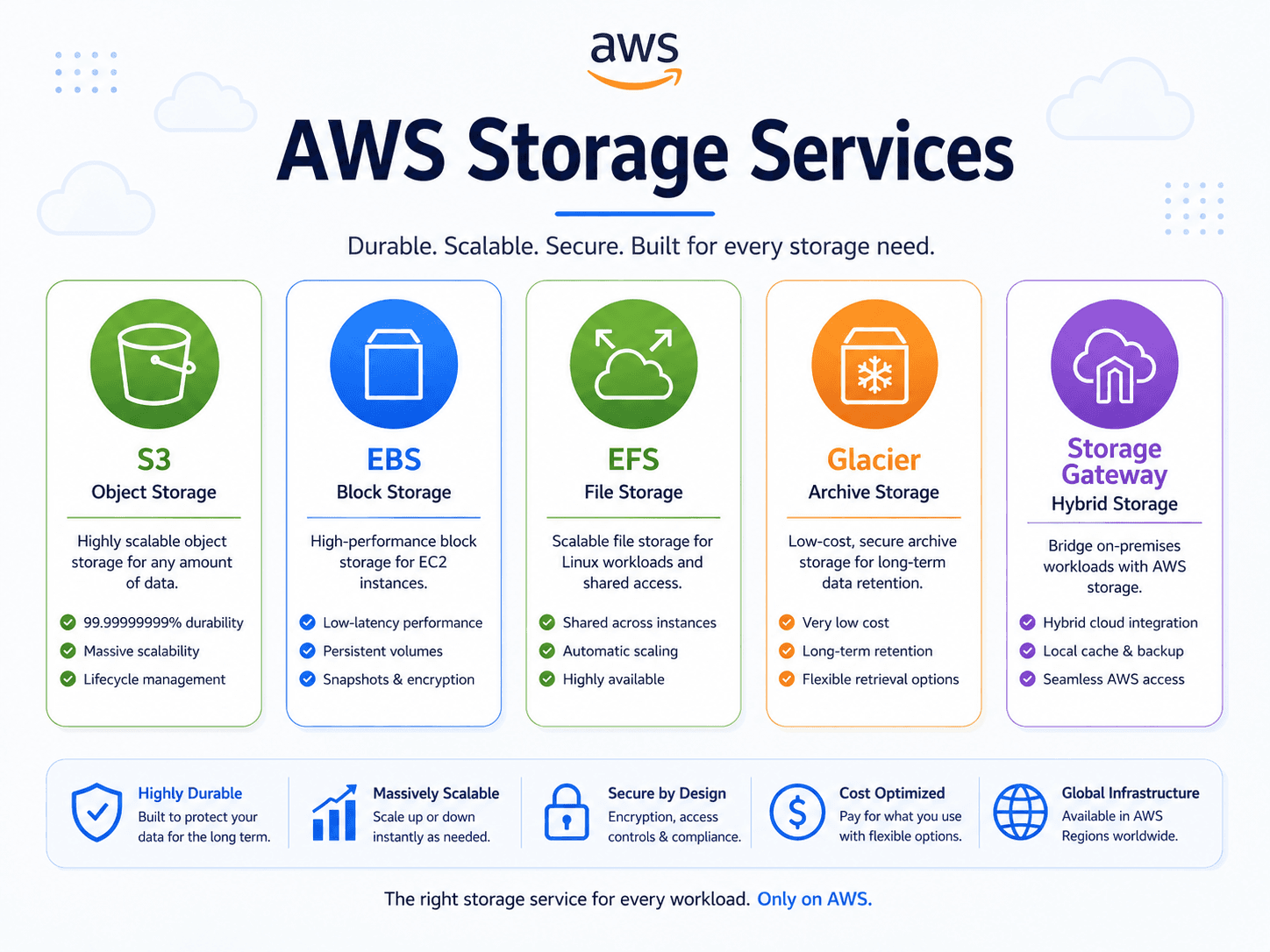
A beginner-friendly guide to Amazon S3 storage classes, EBS, EFS, FSx, and lifecycle rules, using a closet-versus-warehouse analogy to make the choices click.
How AWS decides who is allowed to do what — users, groups, roles, policies, least privilege, and the user-versus-role distinction the exam keeps testing.
The one identity with unlimited power over your AWS account — the short list of tasks only it can perform, and how to protect it.
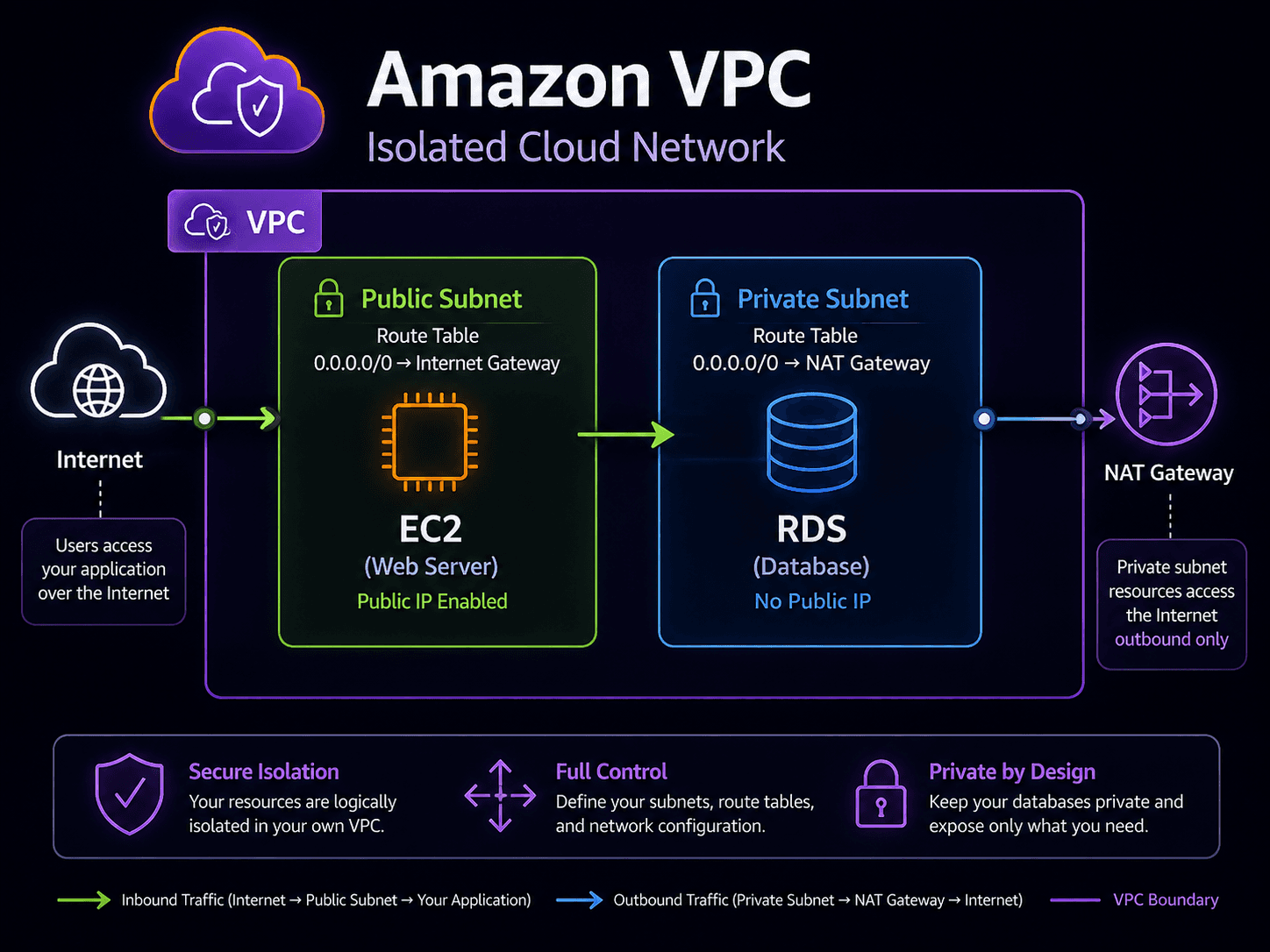
A plain-English tour of VPCs, subnets, gateways, and load balancers, using an apartment building as the map for how AWS networking actually works.
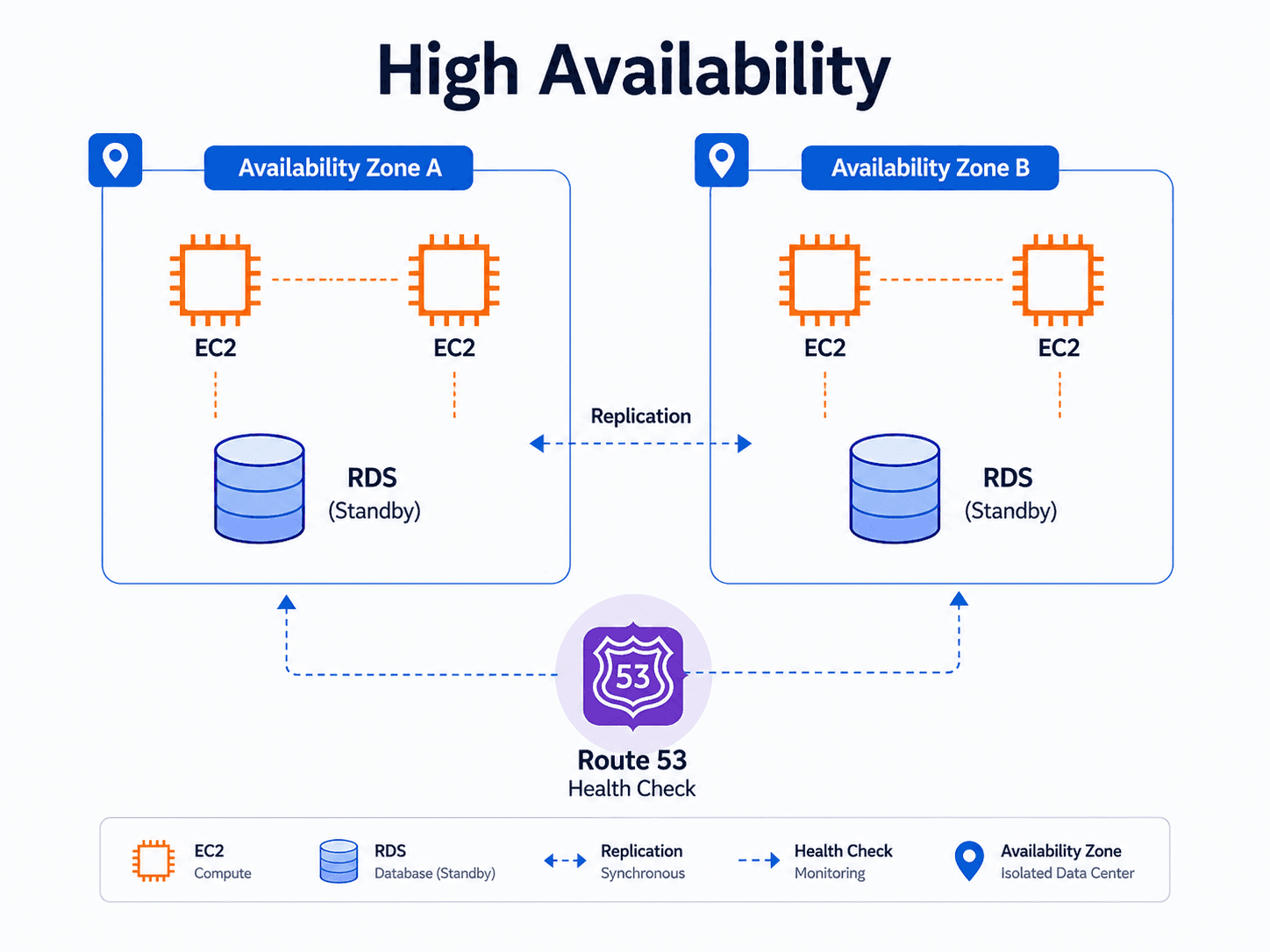
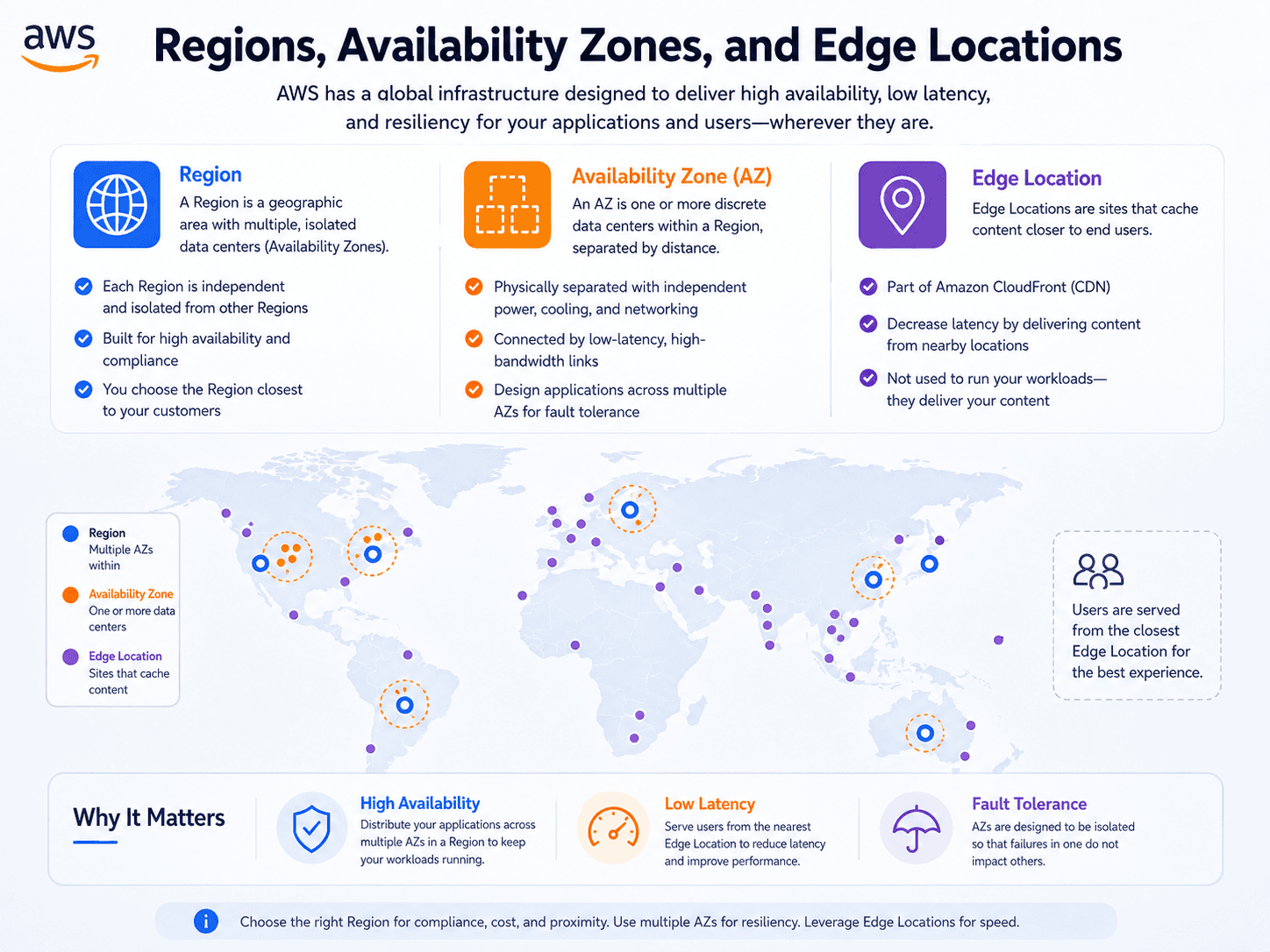
A beginner-friendly guide to AWS Regions, Availability Zones, and edge locations, and why they matter for reliability and speed.
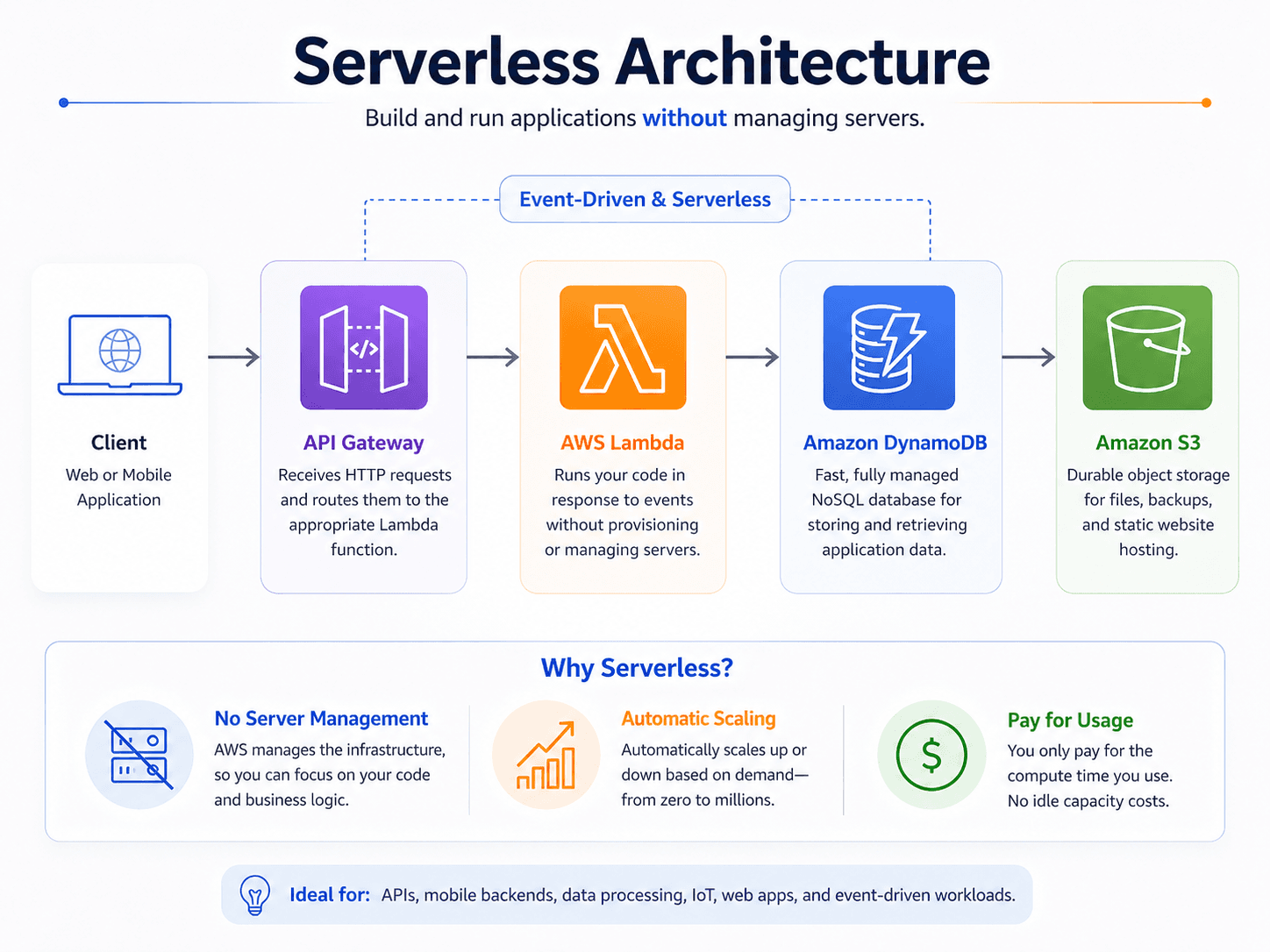
An introduction to serverless computing on AWS, including AWS Lambda, containers, and how services like Fargate remove server management from your plate.
A beginner-friendly explanation of Amazon EC2, virtual servers, and the different ways you can pay for compute power on AWS.
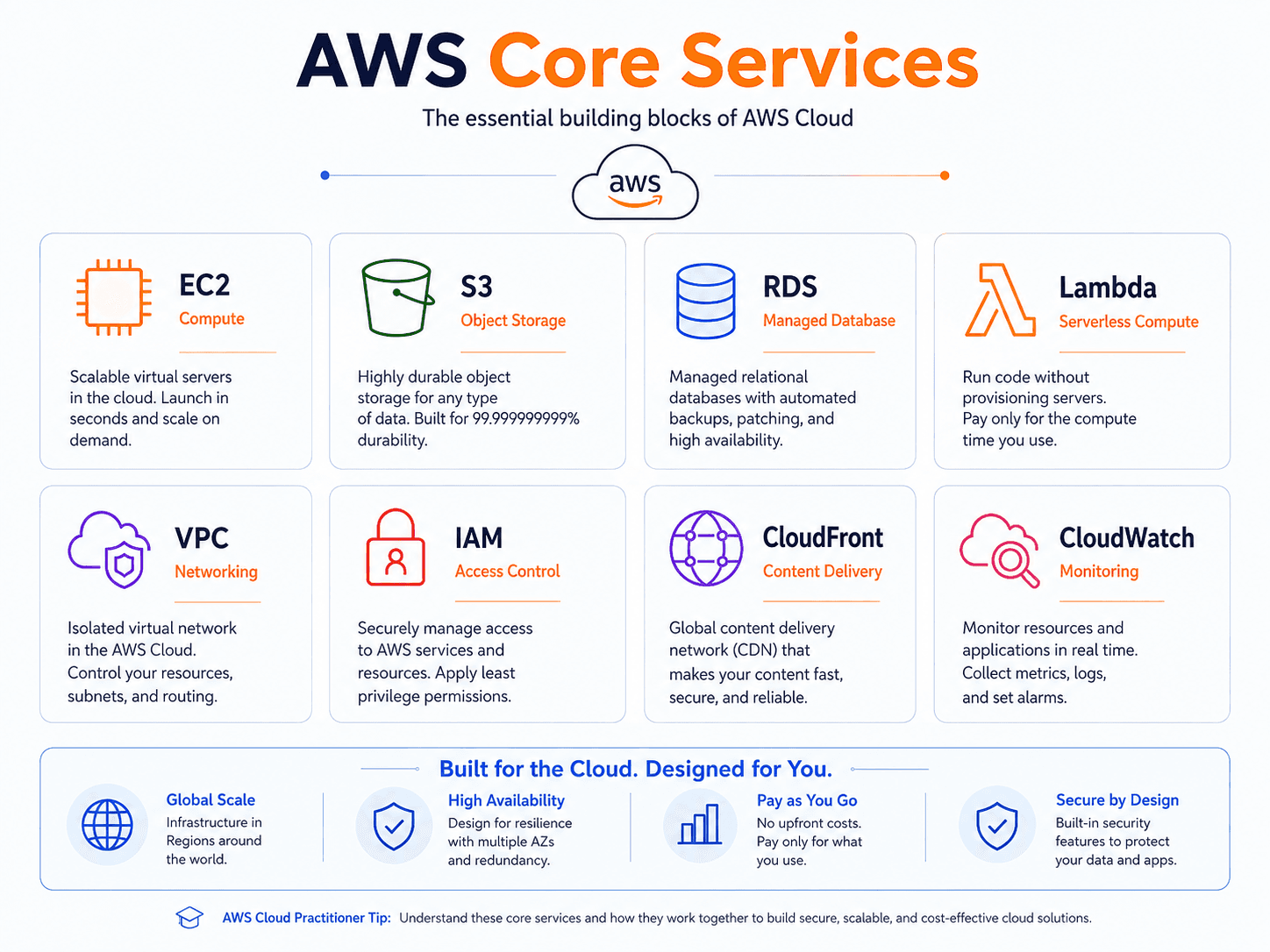
A plain-English look at what cloud computing actually means, and why businesses choose AWS over running their own servers.